
Phantom AI
Phantom AI trusted ICS for their C++/Qt expertise, and ICS delivered a robust visualization tool for real-time autonomous vehicle insights.
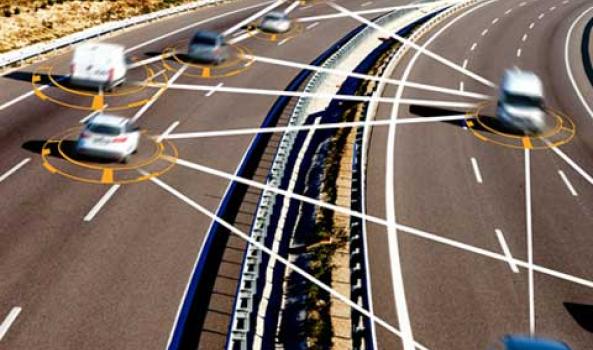
Phantom AI is on the Front Lines of the Driverless Revolution
Autonomous-driving innovator Phantom AI, based in Burlingame, California, is busy cracking the secret of AI driving, with an assist from Integrated Computer Solutions (ICS). The company, headed by Hyunggi Cho and Chan Kyu Lee, is squarely focused on saving lives and reducing the burden of everyday driving via sophisticated auto-driving tech.
And they’re working hard to make sure their AI solutions are accessible to more than just luxury-car owners. “Our ultimate goal is to develop technology that delivers fully autonomous driving that is safe, reliable and affordable,” Cho said. “It is important that this technology is available to everybody, which is why we use an optimal sensor suite to reduce product cost.”
Phantom AI’s computer vision technology, dubbed PhantomVision™, provides fundamental building blocks for autonomous vehicles. The technology incorporates a deep-learning-based detection front-end and geometry-based filtering back-ends and is aimed at Tier 1 automakers and OEMs.
Cho got his start at another innovator in the driverless-auto space — Tesla — working on the carmaker’s autopilot system. While Tesla gives the allusion that developing functional autonomous driving systems is relatively easy, “creating a viable autonomous system is extremely challenging,” Cho said. “There is so much telematic data that needs to be assimilated and communicated in order to ensure a safe ride.”
According to Cho, every year traffic accidents account for nearly 1.3 million fatalities worldwide, a number echoed by the U.S. government, which reports that 94% of crashes are caused by human error. “That’s why Phantom AI is committed to democratizing technologies,” Cho said. “We’re making partially autonomous features like Automatic Emergency Braking and Emergency Lane Support available to all while working toward a solution for a fully self-driving vehicle.”
THE CHALLENGE
An Intuitive User Interface Lies at the Heart
Though obviously safety is paramount for autonomous technologies, industry experts suggest it’s not all that’s needed for auto-driving success. Usability too is essential. Drivers — or are they really passengers? — will fume if their vehicles take them to the wrong location, drive the wrong way down a one-way road, or hesitate too long at busy intersections.
To ensure Phantom AI’s autonomous system works seamlessly, huge amounts of sensor data is collected and assimilated. Integrated Computer Solutions (ICS) was asked to help Phantom AI visualize all that data.
“We chose ICS because they are the best player in the C++/Qt domain. And our decision was the right one since they created a fantastic visualization tool.”
THE SOLUTION
Achieving Proof of Concept
ICS’ role was first to help Phantom AI answer a basic-but-pivotal question: is it even possible to visualize this much data at once? As proof of concept, ICS’ engineering team conceptualized and then designed a visualization application that could present massive data input in a clear, easy-to-read way.
With the proof of concept a success, Phantom AI asked ICS to tackle the next, more challenging phase: actually building the application. To that end, the ICS engineering team wrote a robust library of reusable code and then developed a streamlined UI. Using Qt, naturally cross-platform, allowed it to run in Windows, Mac and Linux environments.
The team used advanced OpenGL features to enable multi-threaded data streaming into custom shader programs, which were then used to render each type of sensor data. This approach allowed ICS to clearly visualize complex heterogeneous data sets in real-time.
For the UI, ICS chose to use a ‘tear-off tabs’ style to allow several different screens with a broad array of highly detailed data to be viewed at once. To hook it up to Phantom AI’s data stream, the team pushed innovation by devising a clever way for all of a computer’s cores to participate in the 3D visualization process. Typically, only one core can participate at a time, so this new solution heightened performance for Phantom AI. “We have a unique approach to the autonomy problem, and visualizing complex and extensive data in an effective way is critical,” Cho said. “Clean visualization is of utmost importance. We’re very pleased with the visualization tool ICS developed. We’ve used it multiple times to show investors exactly how our autonomous systems work.”
THE RESULT
The Self-Driving Future is Closer Than You Think
“While we’re making some tweaks to the visualization tool as our work evolves, ICS built a very strong structure and provided the right training so we could optimize this tool,” Cho said. “This foundation set us up for success. We truly appreciate ICS’ effort.”
With ICS’ contribution, Phantom AI has jumped steps ahead in its journey. “Our ultimate goal is to develop technology that delivers fully autonomous driving that is safe and reliable,” Cho said. While it’s true that moving from the partial autonomy found in today’s cars to fully autonomous vehicle requires a quantum leap, Cho said his firm is deeply committed to a fully self-driving future. Said Cho, “It will save millions of lives.”